The short answer
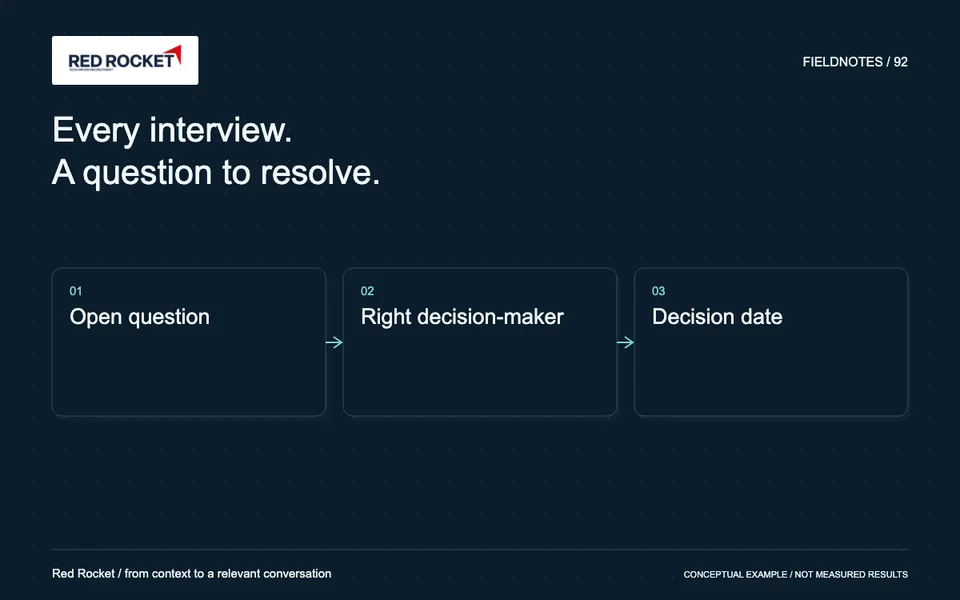
Decide upfront how many rounds you need and why. Link each round to a concrete open question you cannot yet answer. Communicate the number of steps in the first invitation. Only change the process if you explain why. There is no universal ideal number of conversations – it depends on the role and the organisation.
Bring one vacancy. In 30 minutes, we discuss where your recruitment is getting stuck, which approach could fit and your recruitment fee.
Start with the question you need to answer
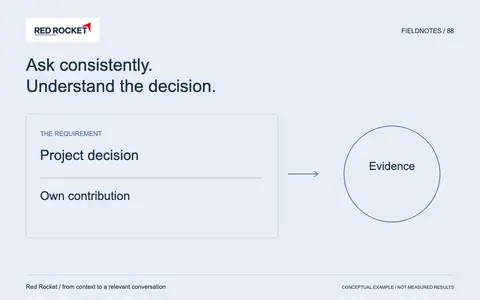
Before scheduling a second or third round, ask yourself one question: what do I still not know after this conversation? Link every round to a specific open question and to a decision-maker who can give a clear yes or no afterwards. Without that link, an extra round is not certainty – it is postponement.
Announce the number of steps in the first invitation
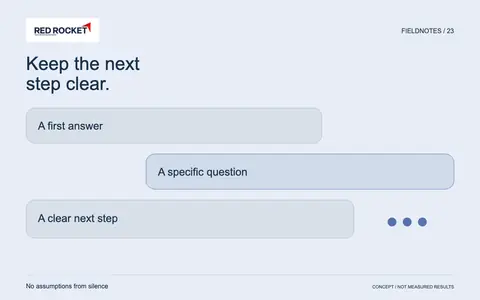
Tell candidates in the first invitation how many conversations you expect and what each step is for. Experienced professionals plan their diaries and their expectations. Transparency about the process signals how you work as an organisation – even if the candidate ultimately does not join.
Only change the process with an explanation
Sometimes an extra round is unavoidable: a new stakeholder, a changed role scope. That happens. But communicate it actively, explain why it has changed, and ask whether the candidate is comfortable with that. Silently adding a round undermines the trust you built in earlier steps.
A concrete example: three rounds, three questions
An organisation is hiring a senior project manager. Round one: does the background fit the assignment? Decision-maker: hiring manager. Round two: how does the candidate approach a concrete challenge? Decision-maker: future team. Round three: organisational fit and terms. Decision-maker: director. Every round has an owner and an outcome – no round exists just to be safe.
How Red Rocket supports this
Red Rocket combines campaigns, an AI recruiter, and organisational context so candidates arrive well-qualified. That gives your team more information before the first conversation, allowing you to focus each round on what is genuinely still open. Personal assessment and final decisions stay with your recruiters and hiring managers. Book a conversation to discuss how this fits your recruitment process. Further background on candidate experience via the Recruitee blog on candidate experience – this reflects a vendor perspective, not independent research.
Frequently asked questions
Is there an ideal number of job interviews?
No. It depends on the complexity of the role, the number of decision-makers, and the information you need from each round. Two to three rounds is workable for many roles, but that is not a rule – it is a starting point for your own judgement.
What if a candidate drops out because of too many rounds?
That is a signal, not a coincidence. Experienced professionals weigh their time carefully. If multiple candidates withdraw at the same point in the process, that is reason to examine that round critically: what question does it answer, and could it be answered differently?
Can Red Rocket determine the number of rounds for me?
Red Rocket contributes to thinking about your recruitment process, but the number of rounds and the corresponding decision-makers are yours to set – that is organisation-specific. Discuss this in an intake so that campaign and process align from the start.