The short answer
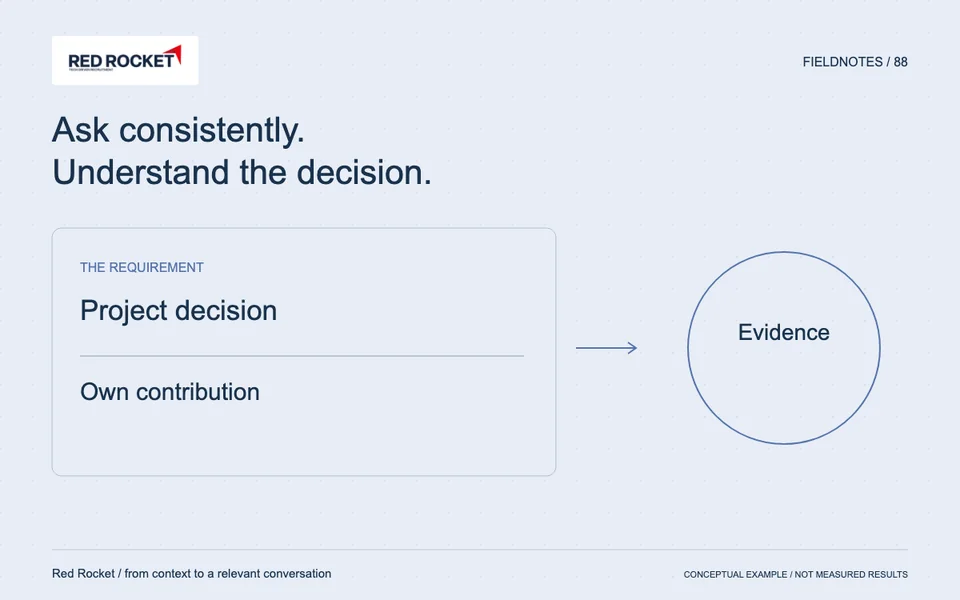
Ask every candidate the same core questions about scope changes, budget management, and stakeholder alignment. Probe for concrete evidence: what exactly did the candidate do, and what was the result? Record answers systematically. The final assessment and decision rest with the hiring manager – a structured interview supports that judgement, it does not replace it.
Bring your role, region and essential criteria. In 30 minutes, we explore how to reach technical people who are not actively looking and which approach could fit your vacancy.
Why structure makes the difference
Without structure you are comparing apples and oranges. One interviewer asks about hobbies, another digs into technical detail. Structured interviews put the same questions to every candidate in the same order. That makes scores comparable and the conversation fairer. It is not a rigid script: probing remains essential, but the foundation is identical for everyone.
Three core themes for a project manager
Build your question set around three themes: scope changes (how did the candidate respond when the brief shifted?), budget management (what decisions did the candidate make when costs threatened to overrun?) and stakeholder alignment (how did the candidate keep client, delivery team, and their own team on the same page?). Each theme gets at least one behavioural question and one follow-up probe.
Concrete example: the scope question
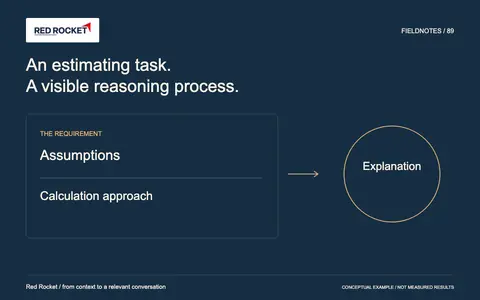
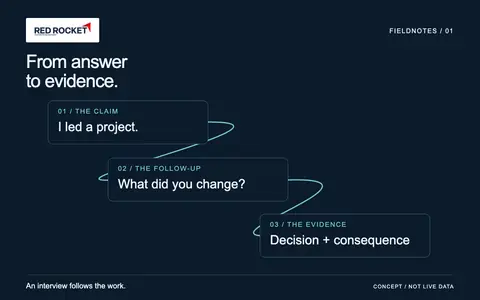
Ask: "Describe a situation in which the scope of your project changed significantly mid-way through. What did you do?" Note the answer verbatim. Then probe: "What was your own decision in that moment, separate from what the team or client asked for?" That distinction separates candidates who react from those who lead. That is exactly what you are looking for in a project manager.
Record evidence, do not interpret on the spot
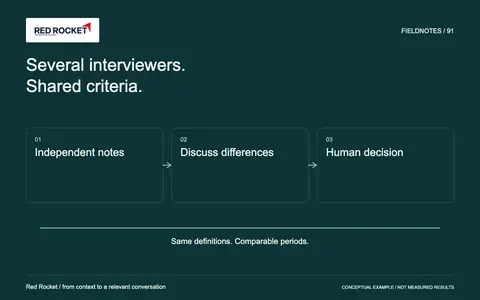
Write down what the candidate says, not what you think of it. Interpret afterwards, preferably together with a second assessor. Use a simple scoring rubric per theme: insufficient, sufficient, strong. That prevents first impressions from driving the final verdict. The hiring manager weighs all input and makes the decision.
Structured interviewing with Red Rocket
Red Rocket's AI recruiter gathers and structures candidate information before the personal conversation takes place. You decide which questions are central and how you assess. Human judgement and follow-up remain entirely with your team. Want to know how to set this up for your project manager vacancies? Book a conversation and read the OPM method guide on structured interviews as a further reference.
Frequently asked questions
How many questions should you ask in a structured interview with a project manager?
Plan for five to seven main questions, each with one or two follow-up probes. More questions rarely yield more insight; they extend the conversation without improving comparability. The quality of the question matters more than the quantity.
Can you adapt the interview if a candidate has an unusual background?
The core questions stay the same for everyone. What you adjust is the context you provide alongside a question, so it connects with the candidate's experience. That keeps the comparison fair without ignoring relevant background.
How do you prevent two interviewers from reaching very different scores?
Before the interview, align on what a strong answer looks like for each theme. Calibrate after the first few interviews: compare scores and discuss any gaps. Plan time for this discussion so differences in interpretation become visible.