The short answer
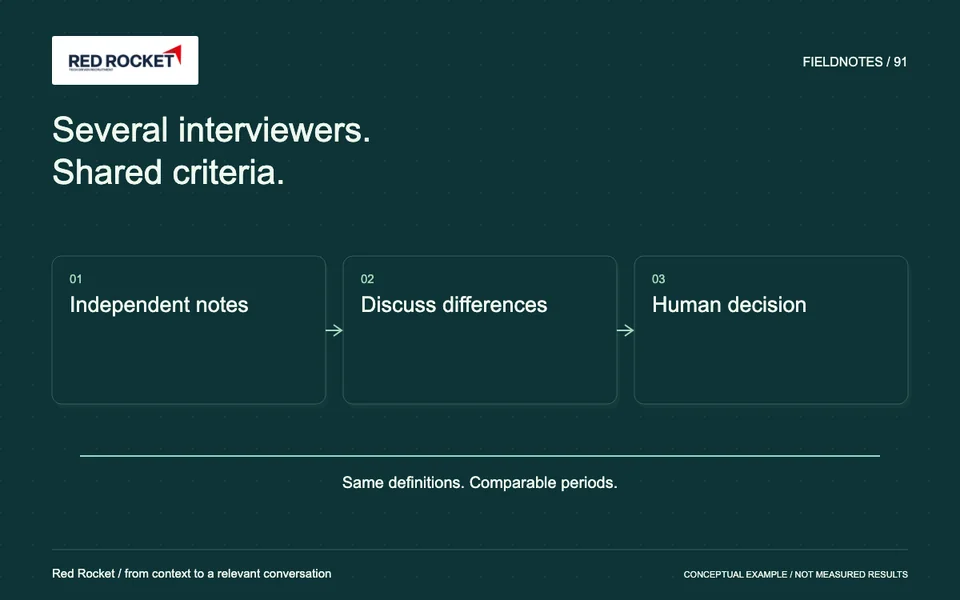
Agree on criteria before you see the first CV. Have every assessor score independently, then discuss the differences. A scorecard provides structure but is not an objective truth – human judgement and conversation remain essential. This prevents the loudest voice in the room from deciding the outcome.
Bring one vacancy. In 30 minutes, we discuss where your recruitment is getting stuck, which approach could fit and your recruitment fee.
Calibrate criteria before you start
Discuss as a panel which competencies and experiences genuinely matter for this role. Write them down before the first candidate appears. This prevents assessors from quietly shifting their criteria to match whoever impressed them most. Calibration takes half an hour; the arguments it prevents take far longer.
Divide roles within the panel
Give each panel member a distinct focus: technical content, collaboration, or organisational fit. This ensures broader coverage and stops everyone asking the same questions. Agree in advance who leads the conversation and who takes notes. Clear roles make the debrief faster and sharper.
Score independently, discuss afterwards
Ask every assessor to record their observations immediately after the interview – before the group discussion. This limits groupthink. In the debrief you compare scores, name your disagreements, and identify what evidence is still missing to make a sound decision.
A scorecard is a tool, not a verdict
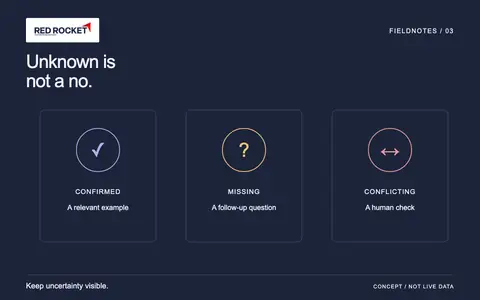
A structured scorecard helps you compare like with like. But a high score does not automatically mean the best match. Always discuss the context behind the numbers: what did assessor A notice that assessor B missed? Missing evidence is information too – it can justify a targeted follow-up question.
How this works in practice – and how Red Rocket supports you
Imagine three colleagues assessing a candidate for a leadership role. One scores communication highly; another rates it average. In the debrief it turns out they were evaluating answers to different questions. That difference leads to a focused follow-up in the second interview. Red Rocket combines campaigns, an AI recruiter, and organisational context so candidates arrive already structured – the personal assessment and panel conversation stay with your team. Book a conversation to see how this works for your vacancy. Further reading on structured interview methods via OPM's methodology guide – note that this reflects US legislation and does not apply directly in the Netherlands.
Frequently asked questions
How many assessors make an ideal panel?
There is no universal ideal number. Two to four assessors is workable in practice: enough for different perspectives, small enough for a sharp debrief. More panel members increases the risk of diffused responsibility.
What do you do when panel members strongly disagree?
Name the difference explicitly and look for the evidence: what concrete observation underlies each person's judgement? If evidence is missing, that is reason for a targeted follow-up question – not a majority vote.
Can Red Rocket complete the scorecard?
Red Rocket handles campaigns and AI-supported qualification, but personal assessment and scorecard completion sit with your team. Ask during a conversation about how this connects to your existing assessment process.