
The short answer
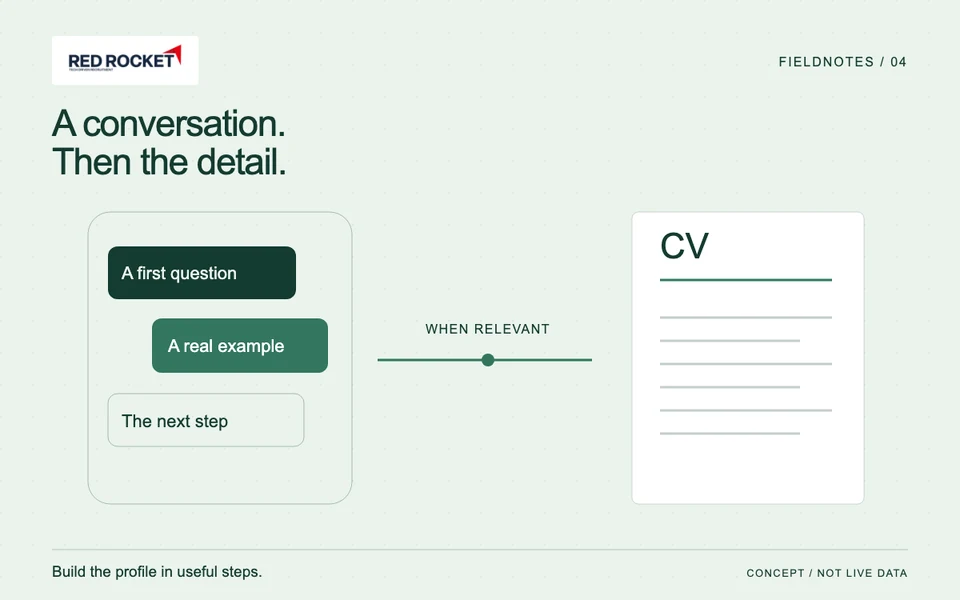
A CV can be a useful next step once the candidate understands the role and has discussed the initial relevant questions. Explain why you need it, which agreed submission route to use and what happens next. Compare the CV and conversation as two sources of self-reported information; use differences to clarify, not to draw automatic conclusions.
Bring one vacancy. In 30 minutes, we discuss where your recruitment is getting stuck, which approach could fit and your recruitment fee.
Give the candidate a reason to engage first
Someone responding to an advert may first want to understand the work. A conversation about projects, responsibilities and terms can help establish whether further discussion is worthwhile. This does not mean every vacancy should start without a CV.
Choose the sequence according to the role and information needed. An essential document check may belong earlier in the process than a detailed career history.
Make the request specific
- Purpose: identify the role and what the CV will help clarify.
- Route: use the agreed professional submission channel and an identifiable sender.
- Next step: explain who reviews the document and how the candidate will hear about progress.
- Help: provide a contact option if uploading or preparing a CV is difficult.
The candidate should be able to understand the request without already having an account or a complete application file.
Compare the content without guessing
A CV can add job titles, dates and tasks not covered in a short chat. The document is also self-reported information. It does not independently confirm every claim.
Fictional example: an automotive professional mentions service scheduling in the chat. The CV also lists team leadership. Ask which tasks belonged to which period and how those responsibilities connected. Do not assess suitability from a job title alone.
Handle submission and access carefully
Explain how the document is processed and where the candidate can ask questions. Do not use a public upload folder or shared link that unintentionally exposes other files. Limit access to those who need the document for selection.
A contact alternative does not mean collecting another copy through every channel. Agree an appropriate route and avoid unnecessary distribution. Security statements must match the actual setup.
Use the document to improve the next conversation
Discuss relevant differences and let the candidate explain them. A period outside work or a different job title does not automatically justify a negative conclusion. Select questions based on their relevance to the role and agreed criteria.
At Red Rocket, the employer receives the supplied CV with the profile, conversation and qualification in Cockpit. Discuss a suitable route from first conversation to personal follow-up.
Frequently asked questions
Does every candidate need to provide a CV?
That depends on the work and the information required. Decide in advance what is essential and what can be supplied in another suitable form.
What if someone has no current CV?
Discuss which relevant information is missing and how the candidate can provide it through an agreed route. Avoid making the document an unnecessary barrier.
Can you ignore differences between the chat and CV?
Discuss differences relevant to the role. Distinguish different wording, different periods and a genuinely unresolved inconsistency.