The short answer
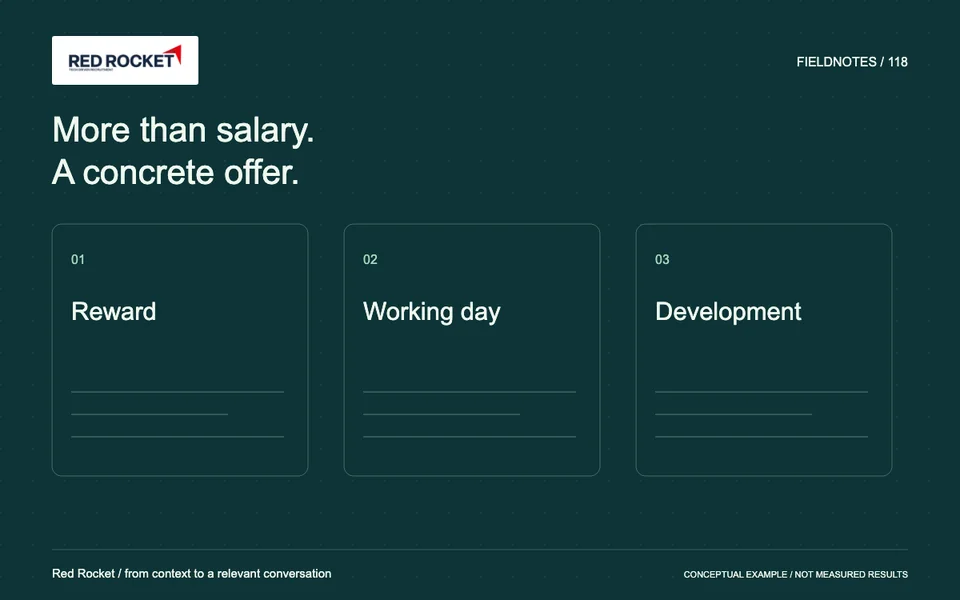
An attractive offer for technical professionals involves more than salary. Commute distance, hybrid working, autonomy, development opportunities and clear contractual terms all matter. Present the full package transparently, without empty promises.
Bring your role, region and essential criteria. In 30 minutes, we explore how to reach technical people who are not actively looking and which approach could fit your vacancy.
Discuss salary and the full package together
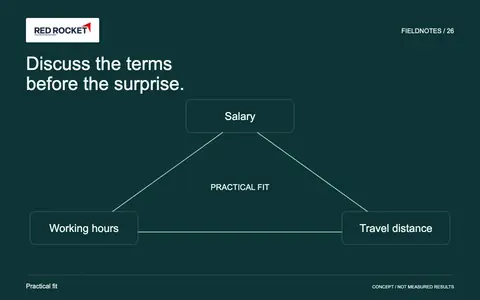
An attractive offer starts with a clear salary agreement. Other terms can add to the decision, but do not replace pay that suits the work and the candidate. The weight of each element varies by person and situation.
Avoid a universal ranking of benefits. First discuss the work, salary and practical commitments. Then ask what someone needs to do the job well: predictable days, time to develop, support or other arrangements. Record what you can actually offer.
Commute and hybrid working: describe the reality, not the promise
Engineers and technical coordinators often work on a project basis. Not every day can be worked from home. Your candidate knows that. They want to know how many hybrid days are realistic, who decides that per project, and what happens when a project runs for three months at a remote site.
Describe the actual practice. Is it two fixed days at home, or an average of two days depending on the project phase? That distinction is concrete – and that's what counts. Travel allowances or a company car carry weight, but only when the base salary holds up.
Autonomy and technical substance: what engineers genuinely weigh up
BIM modellers, structural engineers and project managers want to know what they'll be contributing to. Not just the job title. What kind of projects? Which software? How much say in technical decisions?
Describe decision-making authority concretely rather than listing only general perks. But it has to match reality. Describe the scope of decision-making honestly: what falls within the role, and what doesn't. Candidates who have that conversation ask good questions. That's a good sign.
Development: commit to something concrete rather than making promises
Everyone hears 'we invest in your growth.' Concrete means: which training, who pays, how many hours per year, and what's the arrangement if someone wants to move on after a year?
Fictional example (names and situation are invented): an engineer chooses a role at 'Bouwtech BV' with a slightly lower salary over a higher offer elsewhere. The first role contractually fixes a BIM training budget of £1,500 per year. The other role promises 'development opportunities' with no further detail. Small, concrete commitments beat large, vague promises.
Make the offer verifiable
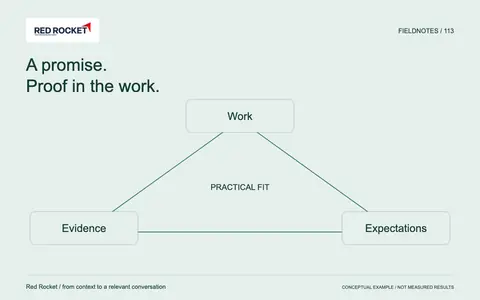
Have the responsible HR or employment terms specialist check which collective agreement and contractual arrangements apply. Describe the salary basis, hours, project locations, allowances, development arrangements and decision-making authority. Distinguish a fixed entitlement from a conditional arrangement or something still to be discussed.
Send the offer in an understandable format and allow questions. The verbal explanation and written proposal should match. Agree who can answer questions about exceptions; do not let campaign copy or an AI conversation invent them.
UWV describes pay, working atmosphere and practical terms from the perspective of active job seekers in 2025. This is not a ranking for all technical professionals who are not actively searching. Read the UWV research (Dutch).
At Red Rocket, confirmed role and organisational information provides the context for the campaign and first introduction. Review the collected answers in Cockpit and decide the personal next step as the recruiter or employer. Discuss the offer for your vacancy.
Frequently asked questions
How do I find out what a project manager or engineer values beyond salary?
Ask early in the process. What kind of projects, how much autonomy, where and how often they'd be working. Have that conversation before making an offer. That's how you find out where you can make the difference.
What should I check before publishing employment terms?
Check what applies to this role and what you can actually commit to. Have the responsible specialist review the collective agreement, contract, any exceptions and the wording. General job copy does not replace that check.
How does Red Rocket incorporate the offer into the first AI introduction via WhatsApp?
The employment conditions and organisational context you provide are reflected in the first AI introduction via WhatsApp. Candidates receive an honest picture of the offer from the outset. The recruiter sees the responses in Cockpit and decides how the conversation proceeds from there.