
The short answer
A useful brief describes the actual work, essential criteria, employment terms and unanswered questions. Ask HR and the responsible manager to check it together. Distinguish requirements, skills that can be learned and preferences. Record changes so the campaign, conversation and assessment continue to tell the same story.
Bring one vacancy. In 30 minutes, we discuss where your recruitment is getting stuck, which approach could fit and your recruitment fee.
Describe the work behind the job advert
A job advert is an invitation. A useful initial conversation often needs more detail. Which projects will the person work on? What decisions can they make independently? Who will they work with and when is consultation required?
Describe an ordinary working day and a difficult situation. This helps develop questions that go beyond a job title or a list of software packages.
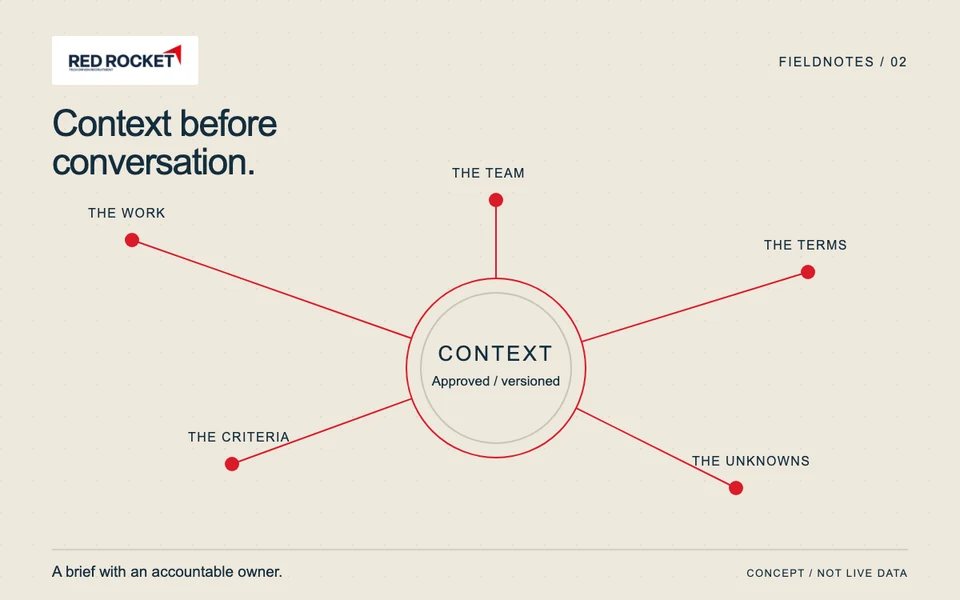
Use a context sheet with five parts
- Work: projects, equipment, tasks and responsibilities.
- Team: collaboration, support and decision-making authority.
- Criteria: what is essential on day one and what can be learned.
- Terms: salary arrangements, location, hours, shifts and possible start dates.
- Unknowns: information HR or the manager still needs to confirm.
Assign an owner to unclear information. An unconfirmed answer should not become a promise in a campaign or chat.
Explain requirements and preferences
“Five years of experience” is less specific than the tasks someone must be able to perform. Ask why a requirement matters and how to assess it. Some certificates or authorisations may be necessary; check this for the actual work involved.
Replace a general preference such as “fits our culture” with work-related expectations, such as coordination with installation teams or independent prioritisation. Avoid making the current team’s background the unspoken standard.
A fictional brief for a service manager
Fictional example: an installation company needs someone to coordinate service scheduling, manage customer commitments and support a technical team. Experience with service processes is required; the planning system can be learned during induction.
The manager still needs to confirm the frequency of on-call shifts. That item is marked “to be confirmed”. The brief contains no employee names, customer files or other information unnecessary for the conversation.
Check and update the context
Have HR and the manager approve the brief. Record a date and version and agree who confirms changes. This is a recommended working arrangement, not a claim about automatic versioning in Cockpit.
At Red Rocket, organisation context guides the AI recruiter. Campaigns, conversations and information in Cockpit connect with that context. Bring your vacancy and discuss any missing context.
Frequently asked questions
Who is responsible for the brief?
Agree on one accountable owner. HR and the manager contribute the content together; someone familiar with the work checks the role criteria.
Should all company information go to the AI recruiter?
No. Share only what is needed for the agreed recruitment process. Do not use confidential files as general organisation context.
What if employment terms change?
Update the brief and check adverts, conversation scripts and candidates already in the process. Record when the new arrangement takes effect.